

Managing a Co-Owned Vacation Home: Your Complete Guide to Successful Shared Ownership
Managing a co-owned vacation home can be both rewarding and challenging. With clear communication and the right systems in place, you can ensure a smooth experience for all owners. Whether you're considering entering a co-ownership arrangement or looking to improve your existing setup, this comprehensive guide will help you navigate the complexities of shared vacation home ownership.
If your family has only just received the property through an estate, begin with the 90-day decision plan for inheriting a vacation home with siblings. It helps you confirm authority, value, affordability, and each heir's intentions before adopting the ongoing systems below.
Understanding the Benefits and Challenges of Co-Ownership
Co-owning a vacation home offers numerous advantages, including shared costs, reduced individual financial burden, and access to premium properties that might otherwise be unaffordable. However, it also presents unique challenges that require careful planning and ongoing management. The key to success lies in establishing clear frameworks from the outset and maintaining open lines of communication throughout your ownership journey.
Many co-owners find that the benefits far outweigh the challenges when proper systems are in place. Shared ownership allows you to enjoy luxury accommodations while splitting expenses like mortgage payments, property taxes, insurance, and maintenance costs. This financial efficiency often enables groups to purchase higher-end properties in desirable locations that would be prohibitively expensive for individual buyers.
Set Clear Agreements: The Foundation of Successful Co-Ownership
Establish written agreements covering usage schedules, expenses, maintenance, and decision-making processes. This helps prevent misunderstandings and sets expectations for all parties involved. Your co-ownership agreement should be comprehensive and legally binding, addressing every aspect of shared ownership to avoid future disputes.
Key elements to include in your agreement:
Usage Rights and Scheduling: Define how booking time is allocated among owners. Will it be equal time shares, or will usage be proportional to ownership percentages? Establish peak season rotation policies and advance booking requirements. Consider implementing a fair system for holidays and special occasions that ensures everyone gets their turn at prime times.
Financial Responsibilities: Clearly outline each owner's financial obligations, including mortgage payments, property taxes, insurance premiums, utilities, and maintenance costs. Establish protocols for handling unexpected expenses and capital improvements. Define what constitutes a major expense requiring group approval versus routine maintenance that can be handled individually.
Decision-Making Process: Create a framework for making decisions about the property, from minor repairs to major renovations. Establish voting procedures and determine what percentage of owners must agree for different types of decisions. Consider appointing a property manager or rotating management responsibilities among owners.
Exit Strategies: Plan for scenarios where an owner wants to sell their share or circumstances change. Include right of first refusal clauses, valuation methods, and procedures for bringing in new co-owners. This forward-thinking approach protects all parties' interests.
After the relevant formal transfer work is complete, use the new holiday home co-owner onboarding checklist to hand over current rules, bookings, costs, maintenance, property information, documents, permissions, and open work. An operational handover should begin after the ownership decision; it should not be treated as evidence that a transfer or authority change occurred.
If the whole group is preparing its first shared operating season, use the first-season setup checklist instead. It sequences roles, costs, booking tests, property readiness, access, early-stay handovers, and the first friction review after the formal setup is ready.
Use Shared Tools: Technology for Seamless Management
Leverage shared calendars and expense tracking apps to keep everyone informed. Transparency is key to avoiding conflicts and ensuring smooth operations. Modern technology has revolutionized how co-owners can manage their shared properties, making coordination more efficient than ever before.
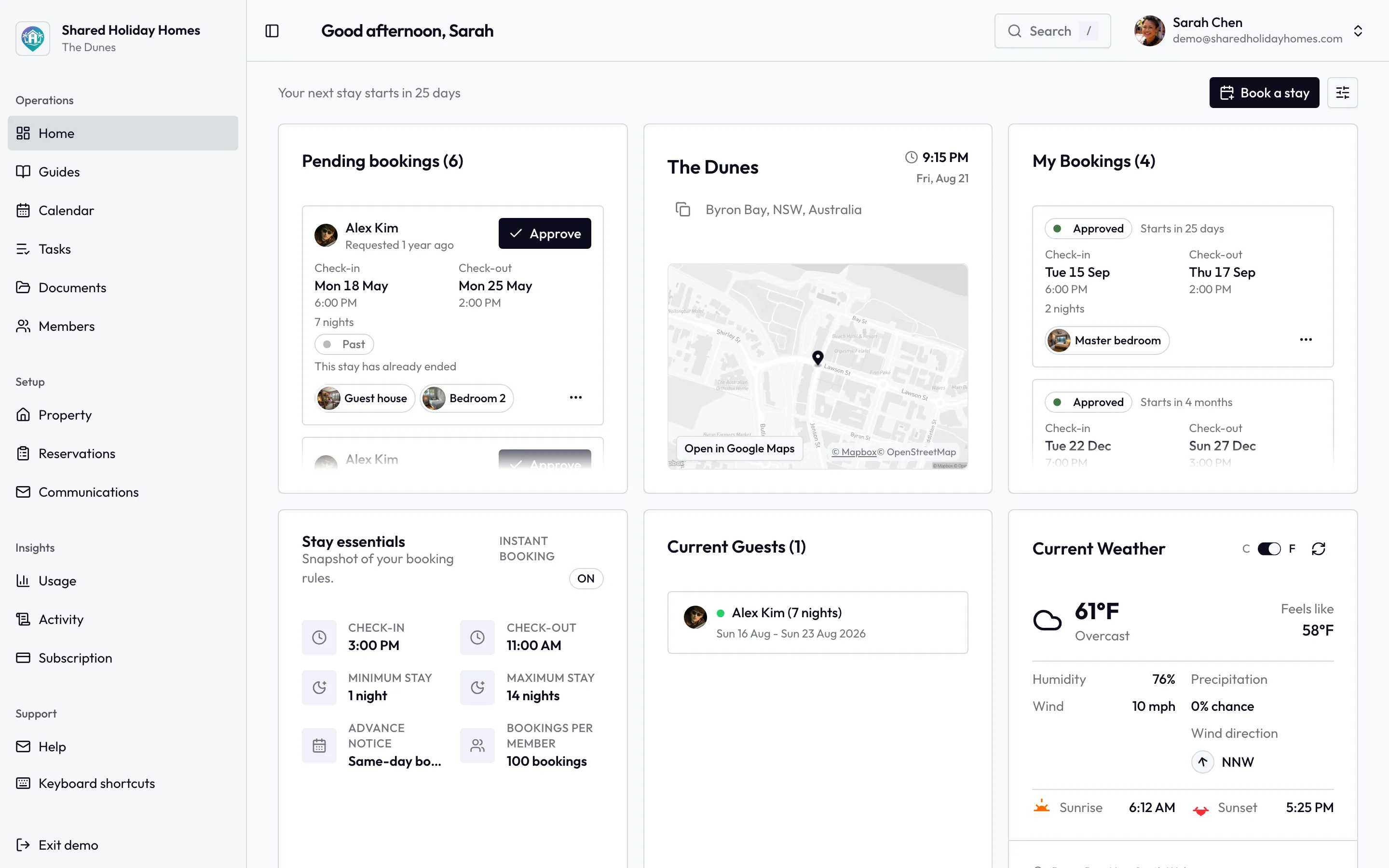
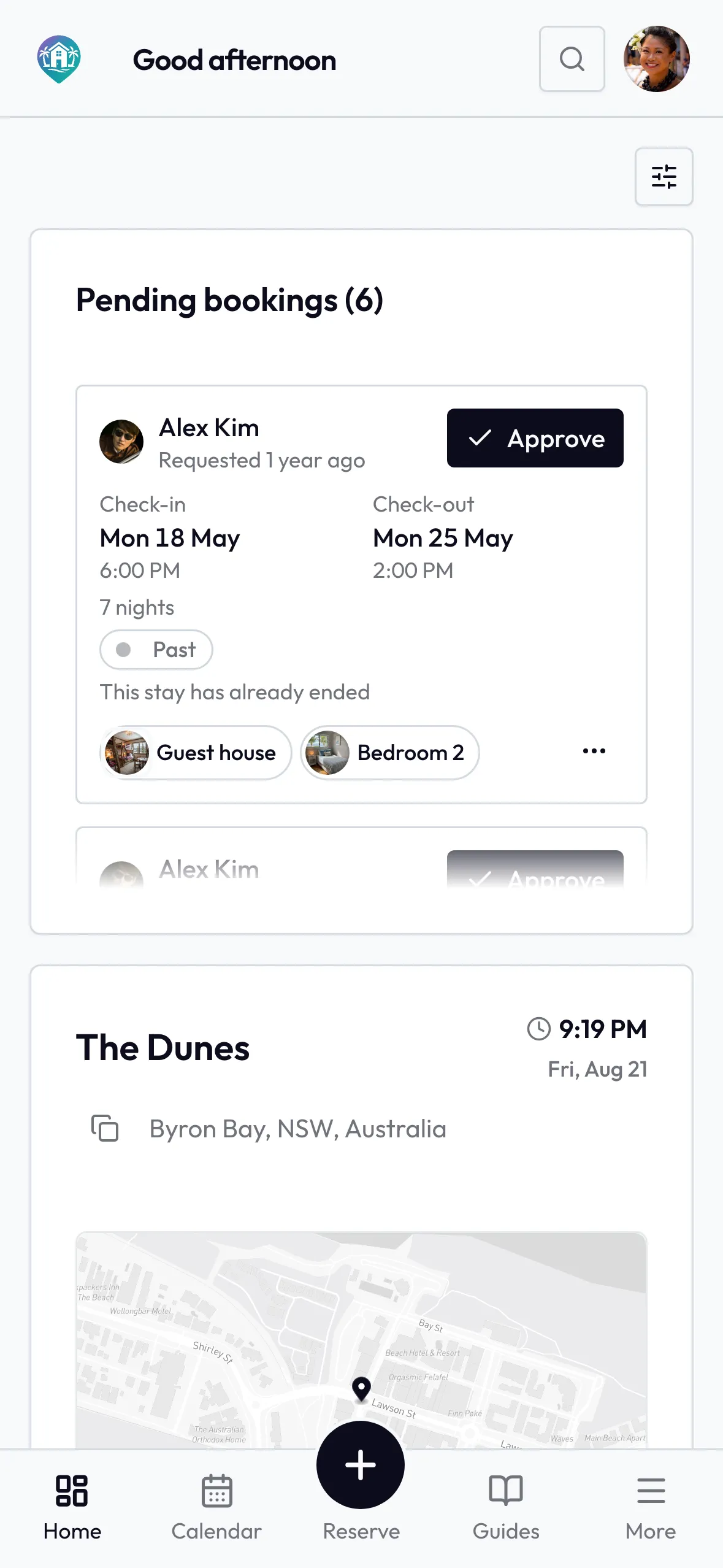
The useful test is whether everyone can open one dashboard and see the current stays, jobs, and house updates.
The most effective co-ownership management relies on real-time communication and instant updates. Modern, responsive web applications designed specifically for vacation home sharing provide centralized platforms where all owners can access current information, make bookings, and track expenses simultaneously. These tools eliminate the confusion that often arises from scattered email threads and outdated spreadsheets.
Look for platforms that offer:
Integrated Calendar Management: Real-time booking systems that prevent double-bookings and allow owners to see availability instantly. The best systems update immediately across all devices, ensuring everyone has access to the most current information.
Expense Tracking and Splitting: Automated expense management that allows owners to upload receipts, categorize expenses, and automatically calculate each person's share. This transparency builds trust and eliminates disputes over financial matters.
Communication Hubs: Centralized messaging systems where owners can discuss property matters, share updates, and coordinate activities. Having all communication in one place creates a valuable record and ensures no one misses important information.
Maintenance Scheduling: Tools for tracking property upkeep, scheduling regular maintenance, and managing service provider relationships. This systematic approach helps preserve your investment's value.
Schedule Regular Check-Ins: Maintaining Strong Relationships
Hold periodic meetings to discuss any issues, upcoming maintenance, or changes in plans. Open communication fosters trust and cooperation among all co-owners. These regular touchpoints serve as opportunities to address concerns before they become major problems and to celebrate successes in your shared ownership journey.
Consider scheduling quarterly meetings, either in person or via video conference, to review:
Property Performance: Discuss how the property is being used, any maintenance issues that have arisen, and overall satisfaction levels among owners. This is also an excellent time to plan upcoming improvements or address any concerns about property management.
Financial Review: Examine expenses, budget performance, and any necessary adjustments to financial contributions. Regular financial reviews ensure transparency and help identify opportunities for cost savings or efficiency improvements.
Schedule Coordination: Plan ahead for busy seasons, holidays, and special events. Proactive scheduling prevents conflicts and ensures fair access for all owners.
Relationship Maintenance: Use these meetings to strengthen relationships among co-owners. Share experiences, discuss what's working well, and address any interpersonal issues that may have arisen.
Plan for Maintenance: Preserving Your Investment
Create a maintenance schedule and assign responsibilities. The vacation home maintenance checklist for co-owners provides a practical arrival, departure, monthly, seasonal, and annual framework. Use the shared holiday home roles and responsibilities chart to separate the accountable owner, task performer, backup, decision route, and handover across maintenance and the other operating areas. Consider hiring qualified local services for specialist work and agree how urgent repairs can be approved.
Develop a comprehensive maintenance plan that includes:
Preventive Maintenance: Regular inspections and servicing of HVAC systems, plumbing, electrical components, and appliances. Preventive care costs far less than emergency repairs and helps avoid disruptions to owners' vacation plans.
Seasonal Preparations: Winterization procedures, spring opening checklists, and seasonal equipment maintenance. Properties in different climates require specific seasonal care to prevent damage and ensure optimal performance.
Emergency Protocols: Establish clear procedures for handling urgent situations, including contact information for local emergency services, utility companies, and trusted repair professionals. Ensure all owners have access to this information.
Capital Improvements: Plan for longer-term improvements and upgrades that enhance the property's value and appeal. Create a capital improvement fund and establish decision-making processes for major renovations or upgrades.
Respect Each Other: The Human Element of Co-Ownership
Be flexible and considerate of each co-owner's needs and preferences. A spirit of collaboration makes co-ownership enjoyable for everyone and creates lasting relationships that extend beyond the property itself.
Successful co-ownership requires ongoing commitment to mutual respect and understanding. Remember that each owner has invested significantly in the property and deserves to enjoy their time there. Practice patience when coordinating schedules, be understanding when unexpected situations arise, and always communicate openly and honestly.
Consider establishing informal guidelines for:
Property Etiquette: Expectations for leaving the property clean and ready for the next owner, respecting personal items left at the property, and maintaining the property's condition during each stay.
Communication Style: Establishing preferred methods and timing for communication, respecting different time zones if applicable, and maintaining professional courtesy in all interactions.
Conflict Resolution: Developing processes for addressing disagreements constructively and maintaining relationships even when opinions differ.
Conclusion: Technology Makes the Difference
Managing a co-owned vacation home successfully requires the right combination of clear agreements, effective tools, regular communication, proper maintenance, and mutual respect. By implementing these strategies and leveraging modern, responsive technology solutions designed specifically for vacation home sharing, you can create a seamless experience that maximizes enjoyment while minimizing conflicts.
The key to long-term success lies in choosing management tools that provide real-time updates, transparent communication, and streamlined coordination. When all owners have instant access to current information and can easily coordinate their activities, the entire co-ownership experience becomes more enjoyable and stress-free for everyone involved.