

Shared Holiday Home Calendar Solutions
A shared calendar should give every co-owner one current view of stays, maintenance blocks, and important property dates. Choose the lightest tool the whole group will actually update, then pair it with a written policy: the calendar records the outcome, while the policy decides priority, peak access, cancellations, swaps, guests, and exceptions.
Why Use a Shared Calendar?
A shared calendar ensures all co-owners have visibility into bookings, maintenance, and special events, reducing the risk of double-booking and confusion. Beyond this basic function, a well-implemented calendar system serves as the central nervous system of your holiday home management strategy.
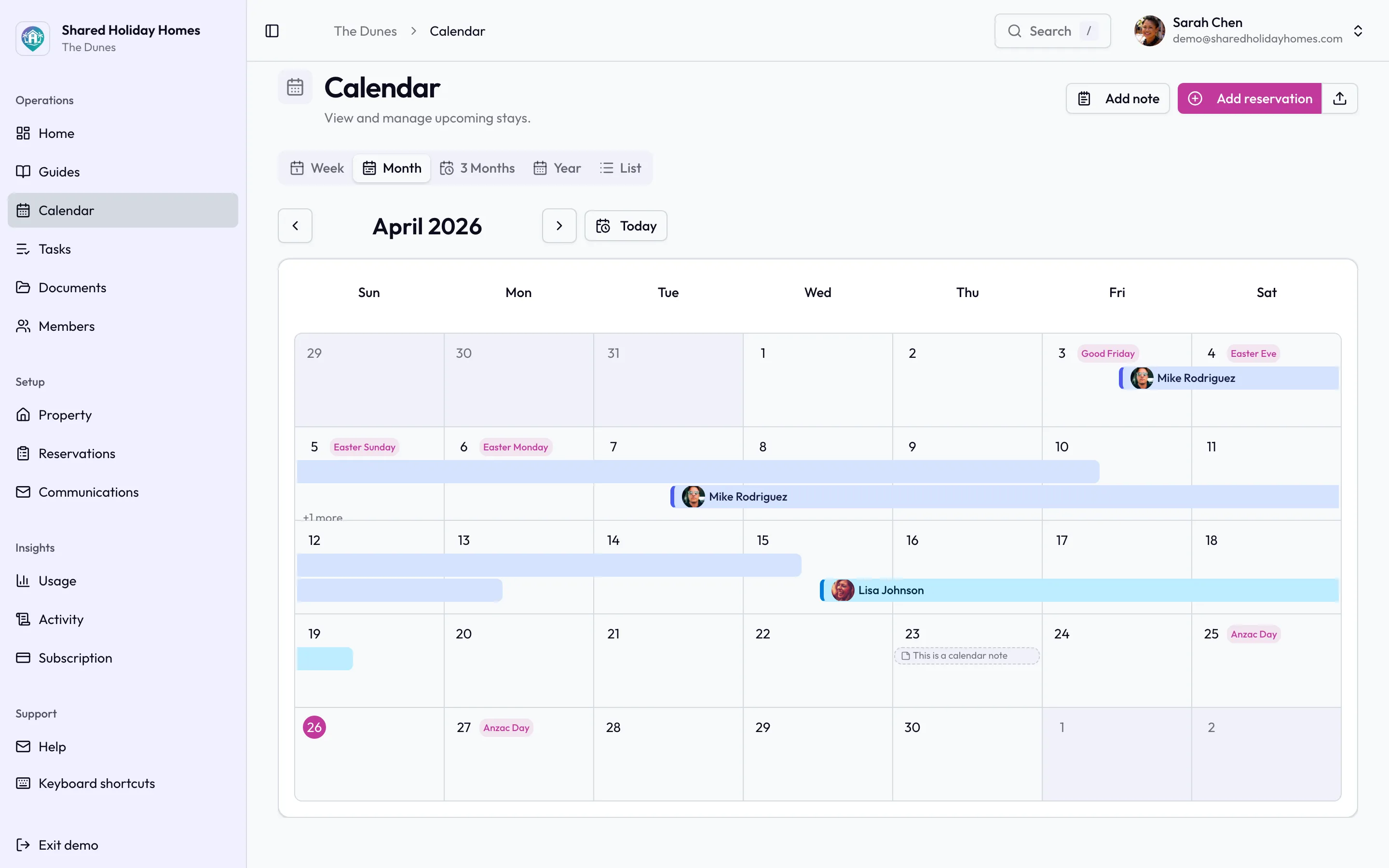
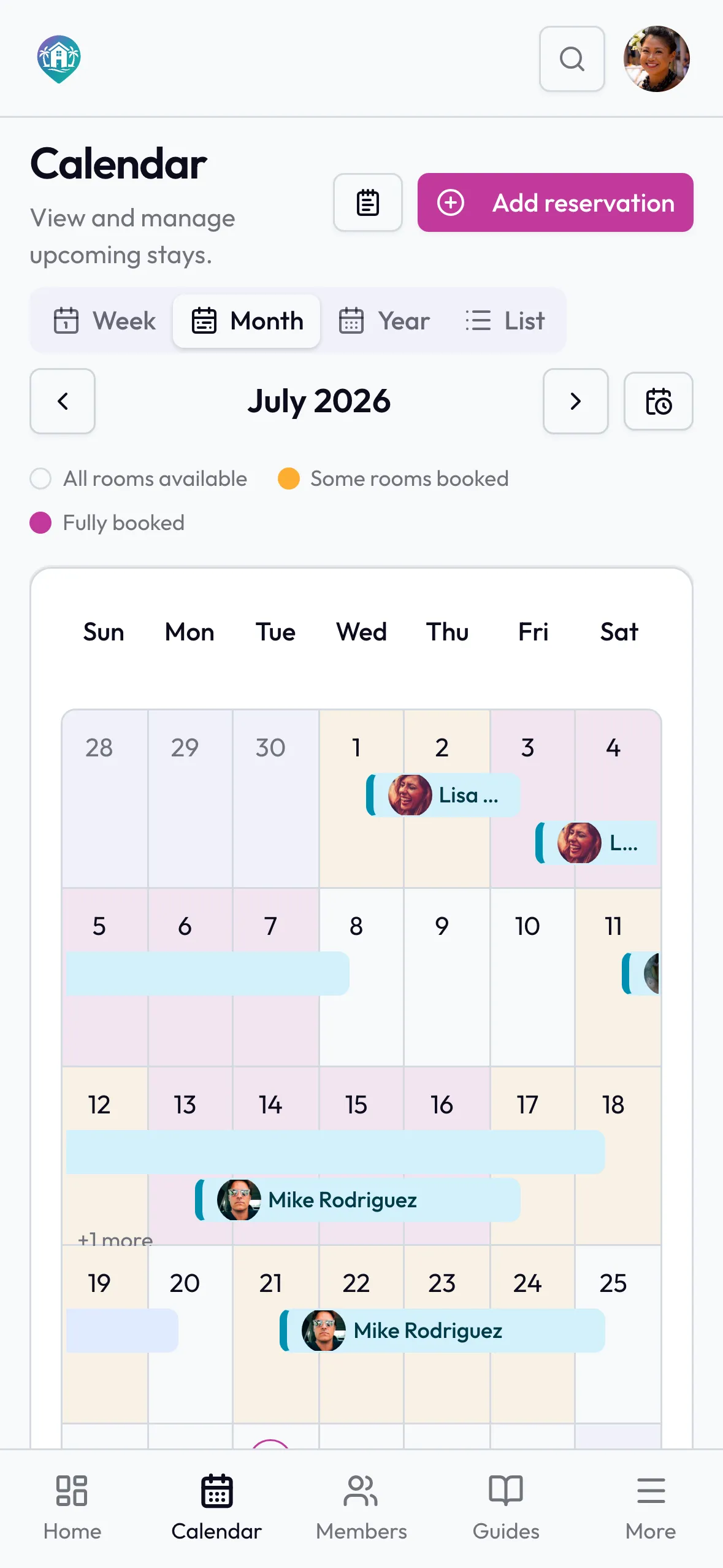
Everyone should be able to open the same calendar and see who is staying, when.
When co-owners can see at a glance when the property is occupied, when maintenance is scheduled, and when special events are planned, it eliminates the need for constant back-and-forth communication. This transparency builds trust among co-owners and prevents the awkward situations that arise when someone shows up to find the property already occupied.
Clear visibility also helps households find genuinely open dates and plan visits without asking one person to reconstruct the schedule from messages.
The psychological benefits shouldn't be overlooked either. When everyone has equal access to information about the property's schedule, it creates a sense of fairness and shared responsibility. No one feels left out of the loop or suspects that others are getting preferential treatment when it comes to booking the best dates.
Top Calendar Tools
Google Calendar: Easy to share and access
Google Calendar remains one of the most popular choices for shared holiday home management, and for good reason. Its intuitive interface makes it easy for co-owners of all technical skill levels to view and update schedules. The platform's robust sharing features allow you to create separate calendars for different purposes – one for bookings, another for maintenance, and perhaps a third for shared expenses or important deadlines.
The mobile app ensures that everyone can access the calendar from anywhere, making it simple to check availability while planning trips or coordinate with maintenance professionals. Google Calendar's integration with other Google Workspace tools also means you can easily attach relevant documents, photos, or notes to calendar events.
Cozi: Designed for family and group scheduling
Cozi takes a more family-oriented approach to shared scheduling, which can be perfect for holiday homes owned by extended families or close friend groups. The platform includes features specifically designed for group coordination, such as shared shopping lists, meal planning, and to-do lists that complement the calendar functionality.
What sets Cozi apart is its focus on simplicity and color-coding. Each family member or co-owner can have their own color, making it instantly clear who has booked what dates. The platform also sends automatic reminders, which can be invaluable for ensuring everyone remembers their planned visits or maintenance responsibilities.
Dedicated property management apps
For co-owners who want a more comprehensive solution, dedicated property management applications offer advanced features tailored specifically to shared vacation home ownership. These platforms typically include calendar functionality alongside expense tracking, maintenance scheduling, and communication tools.
Many of these specialized apps offer features like automatic cleaning schedules, utility management, and even integration with local service providers. While they may require a higher learning curve than general-purpose calendar tools, they provide a more complete solution for serious co-ownership arrangements.
Best Practices
Set clear rules for booking and cancellations
Establishing clear guidelines from the outset prevents conflicts and ensures everyone understands their responsibilities. Consider implementing a booking window – perhaps co-owners can book dates up to 12 months in advance, with a rotation system for popular periods like holidays or summer weekends.
Cancellation policies should be equally clear. Will there be a deadline for cancellations that allows others to book the dates? What happens if someone needs to cancel at the last minute due to an emergency? Having these conversations upfront and documenting the agreements in your calendar system helps prevent disputes later.
Use the 12-decision vacation home booking policy to define those rules before configuring the calendar.
Update the calendar promptly
The effectiveness of any shared calendar depends on everyone's commitment to keeping it current. Establish expectations for how quickly bookings should be entered and changes should be communicated. Consider designating one person as the "calendar keeper" who has final authority over scheduling conflicts, or rotate this responsibility among co-owners.
Real-time updates are crucial for preventing double-bookings and ensuring everyone has access to the most current information. This is where modern, responsive web applications truly shine – they provide instant synchronization across all devices and users, eliminating the delays and confusion that can arise with less sophisticated systems.
Use color-coding for different owners or purposes
Visual organization makes your shared calendar much more useful at a glance. Assign different colors to each co-owner, and consider using additional colors for different types of events – perhaps blue for regular stays, red for maintenance, and green for special events or parties.
This visual system becomes even more valuable as your co-ownership arrangement matures and the calendar fills with different types of activities. You'll be able to quickly identify patterns, spot potential conflicts, and make informed decisions about scheduling.
Integrating with Other Tools
Combine your calendar with expense tracking and communication apps for a seamless co-ownership experience. The most successful shared holiday home arrangements treat scheduling as just one component of a comprehensive management system.
Modern property management solutions recognize this need for integration, offering unified platforms that connect calendar functionality with expense sharing, maintenance tracking, and communication tools. This integration eliminates the need to juggle multiple apps and reduces the risk of information falling through the cracks.
When your calendar system can automatically generate expense reports based on usage, send reminders about upcoming maintenance, and facilitate communication about property issues, it transforms from a simple scheduling tool into a comprehensive management platform.
The calendar should remain the source of truth for confirmed dates. Keep broader property information, tasks, and decisions close enough that co-owners can understand why a date is booked or blocked without putting access codes, private documents, or sensitive personal details in a widely shared event.
If the real decision is whether a free shared Google Calendar is still enough, read the direct comparison: Shared Holiday Homes vs Google Calendar.