

Seasonal Scheduling: How to Divide Peak Times Without Family Drama
Seasonal scheduling decides which households receive peak dates. When approved households will overlap, handle bedrooms separately with shared holiday home room allocation rules. That process applies current room constraints, minimal practical needs, preferences, and tie-breaks without reopening the date allocation.
Navigate the tricky waters of allocating Christmas weeks, summer holidays, and school breaks fairly among co-owners.
Sharing a holiday home means sharing the best times, too. Here's how to keep things fair and friendly:
Seasonal scheduling represents one of the most challenging aspects of holiday home co-ownership. The weeks everyone wants – Christmas and New Year's, prime summer vacation time, spring break, and long holiday weekends – are inherently limited resources that must be divided fairly among multiple families. Poor scheduling systems lead to resentment, conflicts, and damaged relationships that can destroy even the most promising co-ownership arrangements.
The key to successful seasonal scheduling lies in creating systems that feel fair to everyone while acknowledging that different families have different priorities and constraints. Some co-owners might prioritize summer beach time, while others care most about cozy winter holidays. Understanding these preferences and building flexibility into your scheduling system helps ensure everyone feels they're getting value from their investment.
Modern scheduling approaches go beyond simple rotation systems to incorporate sophisticated allocation methods, digital coordination tools, and flexible trading mechanisms. These advanced systems can accommodate changing family needs, work schedules, and personal preferences while maintaining the transparency and fairness that successful co-ownership arrangements require.
Peak allocation is only one part of the wider policy. Use the vacation home booking rules checklist to connect the chosen rotation to booking windows, caps, cancellations, swaps, guests, maintenance blocks, and a review process.
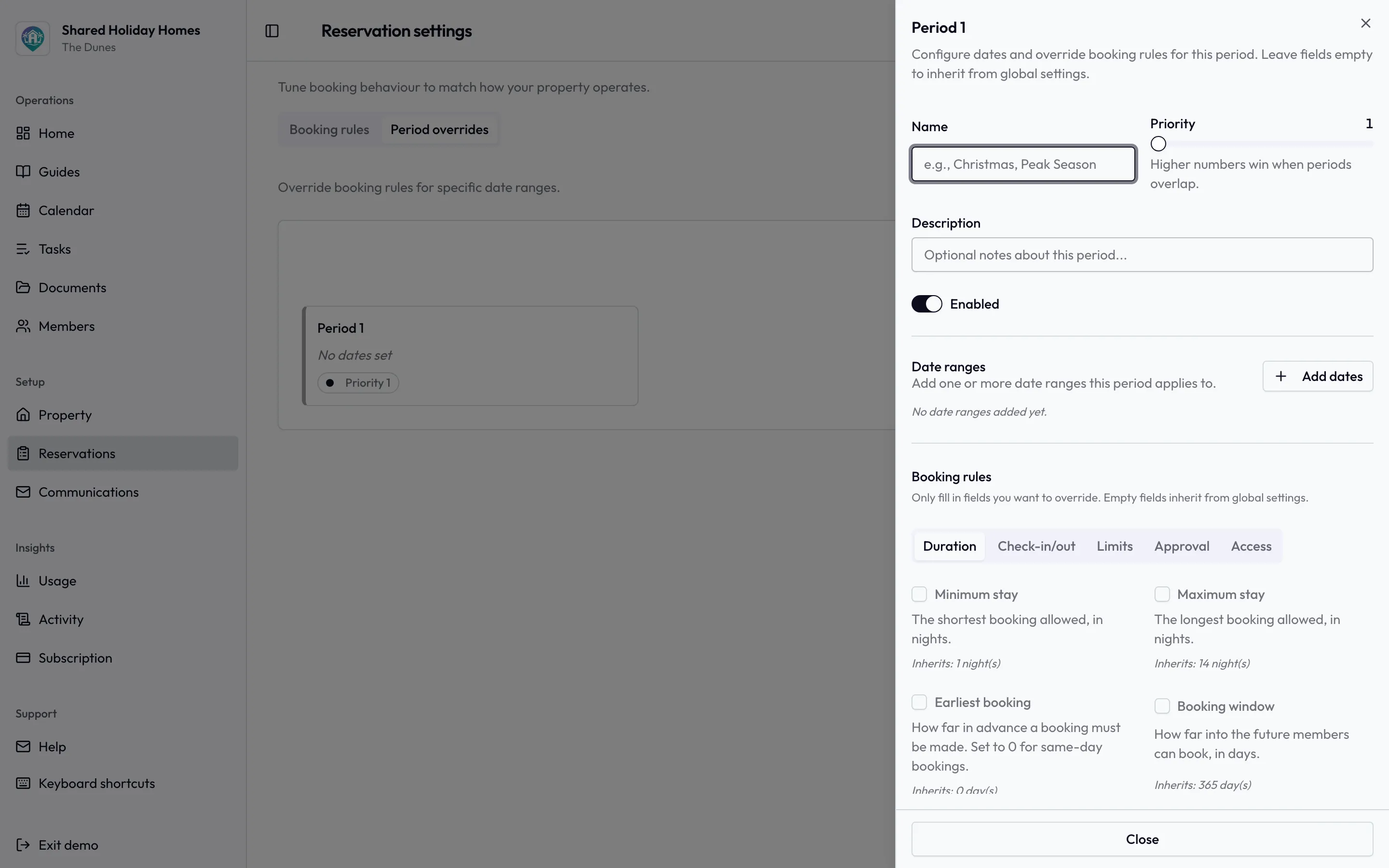
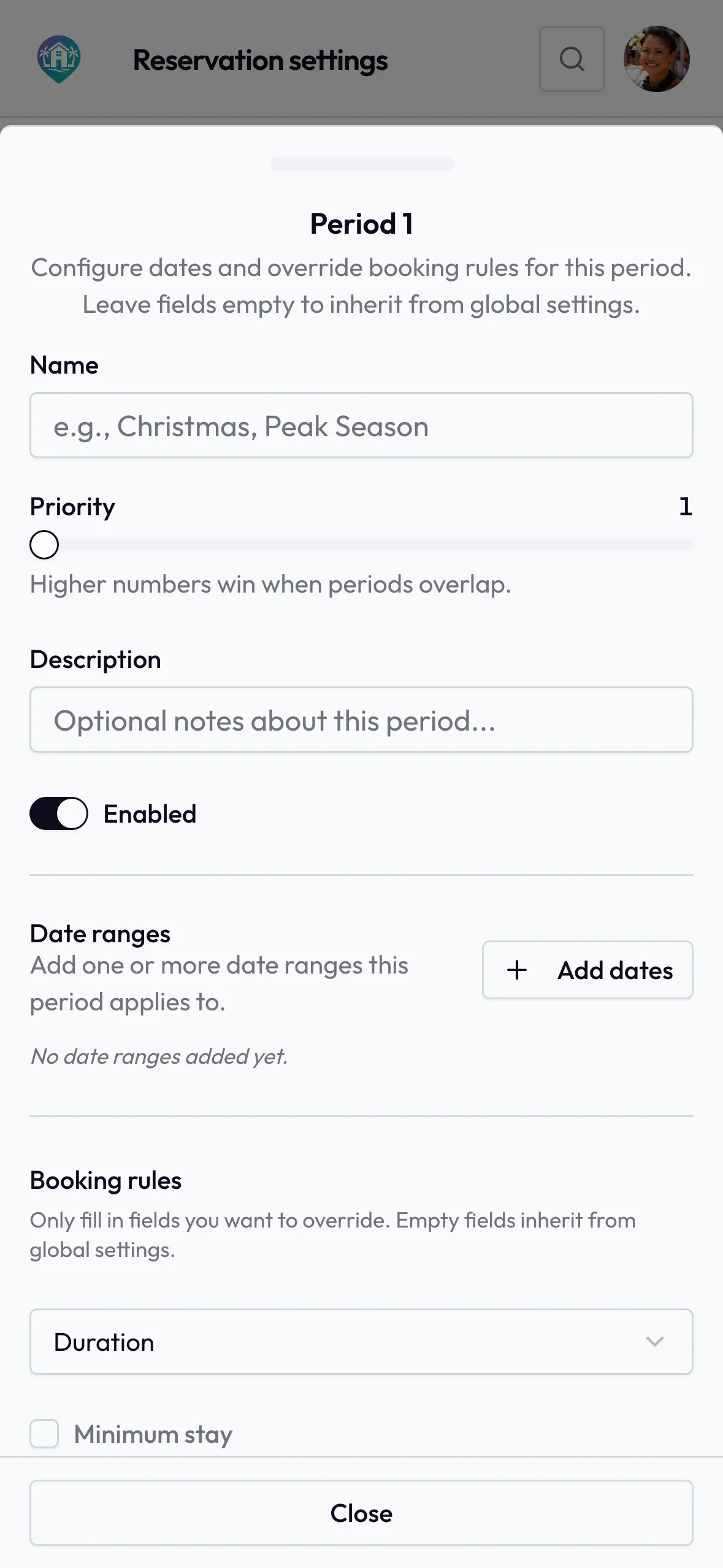
Peak weeks often need tighter rules than ordinary dates — longer minimum stays, approvals, or a different booking window.
Rotation Systems
Assign weeks in a rotating order each year
Traditional rotation systems provide predictable fairness by ensuring everyone gets equal access to desirable time periods over multiple years. In a simple rotation, if Family A gets Christmas week this year, Family B gets it next year, and so on. This predictability allows for long-term planning and ensures no one feels permanently excluded from prime dates.
However, effective rotation systems require more sophistication than simple sequential ordering. Consider implementing weighted rotations that account for different week values – Christmas week might be worth two points in your rotation system, while a random week in March might be worth one point. This approach recognizes that not all weeks have equal desirability and helps ensure truly fair distribution over time.
Multi-year rotation planning becomes essential for families with school-age children or inflexible work schedules. Some co-ownership groups plan rotations three to five years in advance, allowing families to coordinate major events, plan extended vacations, or accommodate changing life circumstances. This advance planning prevents the stress of last-minute scheduling conflicts and allows everyone to make informed decisions about their time allocation.
Use a draft system for high-demand dates
Draft systems, borrowed from fantasy sports, provide an engaging and fair method for allocating the most desirable weeks. In a typical draft, co-owners take turns selecting their preferred weeks in a predetermined order, with the selection order rotating each year. This system combines elements of choice and chance while ensuring everyone gets opportunities to select prime dates.
The draft approach works particularly well for groups with diverse preferences. While one family might prioritize Fourth of July week, another might prefer Labor Day weekend, and a third might want Presidents' Day week for skiing. The draft system allows these different preferences to be accommodated naturally without requiring complex negotiation or compromise.
Consider implementing a "keeper" system where families can retain certain weeks from year to year, similar to keeper leagues in fantasy sports. This might allow someone to keep their traditional family reunion week while still participating in the draft for other desirable dates. This hybrid approach provides stability for truly important dates while maintaining competitive allocation for remaining prime time.
Priority Booking Methods
Let each owner pick their top choice in order
Priority booking systems focus on ensuring everyone gets their most important dates rather than trying to equalize all time periods. In these systems, each co-owner identifies their single most critical week or dates, and these top priorities are allocated first before moving to secondary preferences.
This approach recognizes that most families have one or two absolutely essential dates that matter more than anything else. For some, it might be the week between Christmas and New Year's when extended family gathers. For others, it might be the first week of August when school schedules align perfectly. By ensuring everyone gets their top priority, you create a foundation of satisfaction that makes other compromises easier to accept.
Implement tiered priority systems that accommodate both essential dates and strong preferences. First-tier selections might be limited to one week per co-owner, ensuring everyone gets their most important dates. Second-tier selections could allow additional choices from remaining prime time, with selection order rotating annually to maintain fairness.
Rotate who gets first pick each year
Annual rotation of selection priority prevents any single family from dominating the most desirable dates year after year. This system ensures that everyone eventually gets opportunities to select their preferred dates while maintaining long-term fairness across the co-ownership group.
The rotation should be transparent and predetermined, eliminating any suspicion about favoritism or manipulation. Some groups tie rotation order to anniversary dates of joining the co-ownership, while others use random selection at the beginning of each scheduling period. Whatever method you choose, document it clearly and ensure all co-owners understand and agree to the system.
Consider implementing reverse rotation systems where the family that picked last for prime dates gets first choice for secondary dates. This approach helps balance the advantage of early selection in the primary draft and ensures that late selectors still get meaningful choices from the remaining time periods.
Compromise Strategies
Trade weeks if needed
Flexible trading systems allow co-owners to adjust their allocations based on changing circumstances or discovered conflicts. Family emergencies, work obligations, or special events might require modifications to the original schedule, and effective trading mechanisms help accommodate these changes without creating resentment.
Establish clear trading protocols that ensure fairness and transparency. All trades should be documented and communicated to all co-owners, preventing confusion about who has reserved which dates. Consider implementing trading deadlines that prevent last-minute changes that might disadvantage other families who have already made non-refundable travel arrangements.
Some groups implement "trade banks" where families can accumulate credits for giving up desirable dates, which can then be used to claim better dates in future years. This system helps balance short-term sacrifices with long-term benefits and provides incentives for flexibility when scheduling conflicts arise.
Use a shared calendar for transparency
Digital scheduling platforms provide real-time visibility into all reservations, trades, and availability. This transparency eliminates the confusion and suspicion that can arise from opaque scheduling systems. When everyone can see exactly what dates are reserved and by whom, it builds trust and prevents misunderstandings.
Modern scheduling systems offer sophisticated features beyond simple calendar display. They can send automated reminders about upcoming reservation deadlines, track historical usage patterns to ensure fairness over time, and provide analytics about peak usage periods that help inform future scheduling decisions.
Integration with other co-ownership management tools creates a comprehensive system that connects scheduling with expense tracking, maintenance coordination, and communication. This integration ensures that scheduling decisions are made with full awareness of their impact on other aspects of property management.
Advanced Scheduling Considerations
Accommodating Different Usage Patterns
Successful scheduling systems recognize that different families have different usage patterns and preferences. Some co-owners might prefer multiple short visits throughout the year, while others want extended stays during specific seasons. Flexible systems can accommodate these different approaches while maintaining overall fairness.
Consider implementing mixed allocation systems that include both week-long blocks and shorter stay options. This approach allows families who prefer long vacations to get their desired extended time while providing opportunities for those who want frequent shorter visits.
Handling Special Circumstances
Life circumstances change, and effective scheduling systems must be flexible enough to accommodate evolving needs. New babies, changing work schedules, aging parents, or children starting school can all impact scheduling preferences and availability.
Build accommodation mechanisms into your scheduling system for major life changes. This might include temporary adjustments to rotation orders, modified allocation methods, or special consideration for families experiencing significant transitions. The key is maintaining fairness while showing appropriate flexibility for genuine life changes.
Financial Considerations
Some co-ownership groups implement financial mechanisms to balance scheduling inequities. This might include premium payments for prime dates, rebates for less desirable time periods, or financial trading systems that allow monetary compensation for scheduling advantages.
While financial approaches can provide additional flexibility, they should be implemented carefully to prevent the appearance of "buying" preferred dates. The goal is to create options that help balance different priorities and constraints, not to create a system where financial advantage determines scheduling access.
Long-Term Sustainability
Building Consensus and Buy-In
Successful scheduling systems require genuine consensus among all co-owners. Take time to understand each family's priorities, constraints, and preferences before implementing any system. What works for one co-ownership group might not work for another, and forcing an unwanted system can create lasting resentment.
Regular review and adjustment of scheduling systems ensures they continue to meet everyone's needs as circumstances change. Annual discussions about system effectiveness, combined with willingness to make modifications, help maintain satisfaction and prevent the buildup of frustration.
Documentation and Communication
Record the named peak periods, allocation order, confirmed results, swaps, and unused-date release process in one place. A short written rule is easier to apply than a custom that exists only in old messages.
Set a fixed review date and make changes prospectively. If the group changes next year's rotation, record when the new method begins rather than reopening stays that have already been confirmed.