


The Ultimate Guide to Holiday Home House Rules That Actually Work
Explore proven strategies for creating fair, enforceable rules that keep everyone happy.
Creating effective house rules for a shared holiday home is one of the most critical yet challenging aspects of co-ownership. Unlike personal residences where house rules might be informal family agreements, shared holiday properties require carefully crafted guidelines that balance individual preferences with collective needs. The rules must be specific enough to prevent confusion, fair enough to maintain harmony, and practical enough to be consistently followed by different groups with varying lifestyles and expectations.
The challenge lies in finding the sweet spot between being too restrictive (which can make the property feel more like a hotel than a home) and too permissive (which can lead to conflicts and property damage). Successful house rules create a framework that allows everyone to enjoy their time while respecting the property and other users. When done well, these rules become invisible guidelines that simply help everything run smoothly. When done poorly, they become sources of ongoing conflict and resentment.
The most effective house rules are developed collaboratively by all stakeholders and regularly reviewed to ensure they remain relevant and fair. They should address the practical realities of shared property management while reflecting the values and priorities of your specific group. Remember, the goal isn't to create a legal document that covers every possible scenario – it's to establish clear expectations that help everyone coexist harmoniously.
Why House Rules Matter More Than You Think
Prevent Misunderstandings and Conflicts
The absence of clear rules doesn't create freedom – it creates ambiguity. When expectations aren't explicitly stated, different people make different assumptions about what's acceptable. One family might think it's perfectly fine to leave dishes in the sink for the next group to handle, while another considers this incredibly disrespectful. Without clear guidelines, these different assumptions inevitably lead to conflicts.
House rules serve as a reference point that removes guesswork from common situations. Instead of having awkward conversations about whether someone's behavior is acceptable, you can simply refer to the agreed-upon guidelines. This depersonalizes conflicts and makes them easier to resolve. Rather than "You're being inconsiderate," the conversation becomes "Let's review what we all agreed to."
Well-crafted rules also prevent the escalation of minor issues into major conflicts. When everyone knows the expectations upfront, small problems can be addressed quickly before they become relationship-damaging disputes. This is particularly important in shared holiday homes where people's time is precious and conflicts can ruin entire vacations.
Set Expectations for All Co-owners and Guests
House rules create consistency across different user groups and time periods. When your extended family visits in summer and your college friends come for a winter ski trip, everyone should have the same basic expectations about property use. This consistency protects both the property and the relationships between different user groups.
Clear rules also help when co-owners have guests who aren't familiar with the property or the group dynamics. Instead of each co-owner having to explain expectations individually, guests can review the house rules and understand immediately what's expected. This is particularly important for properties that host events or larger gatherings where not everyone knows the informal norms.
Once the owners agree the rules, publish the short guest-facing version inside a holiday home guest welcome book. Keep voting, cost, and ownership terms in the owners' documents rather than exposing them in the guest guide.
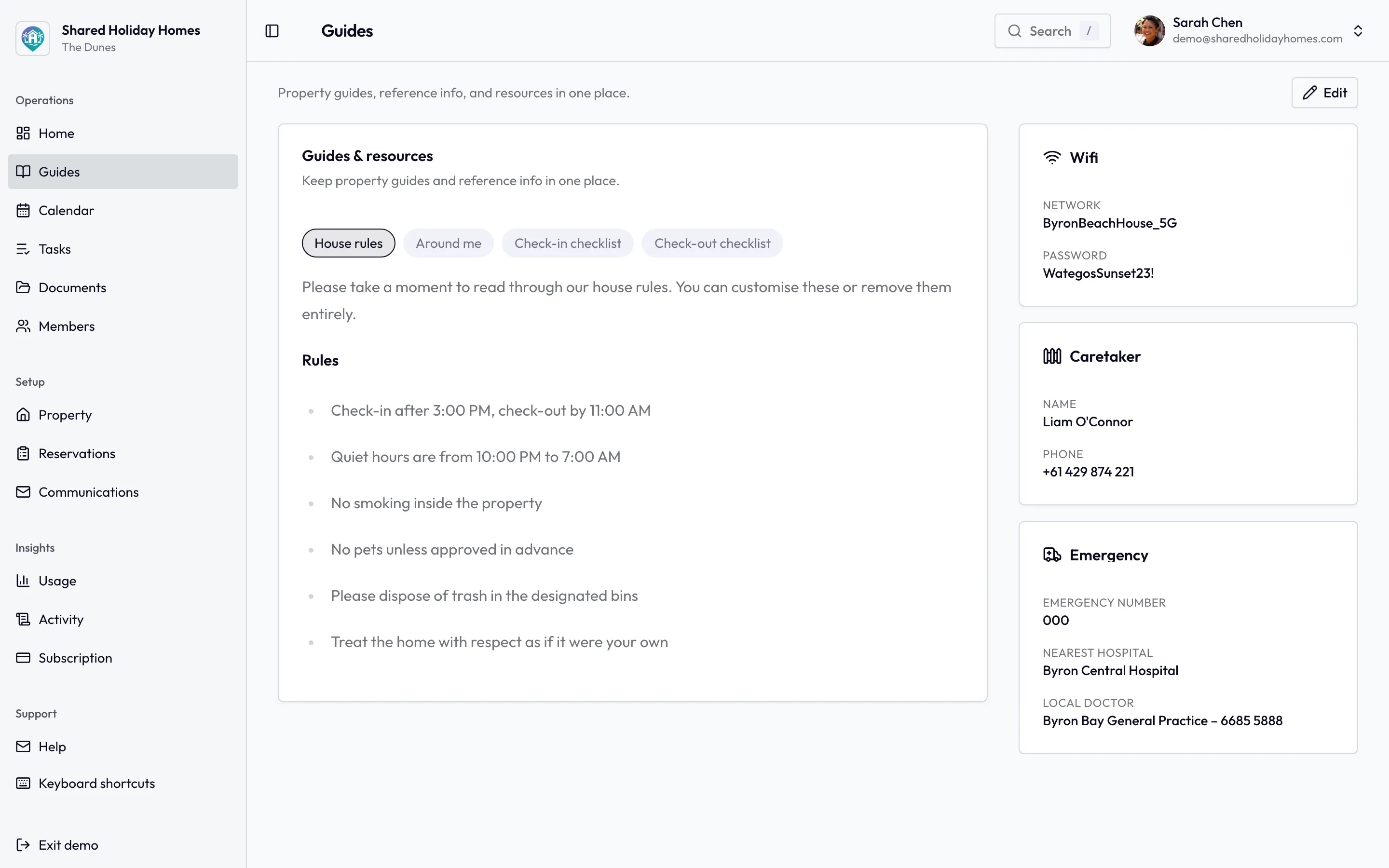
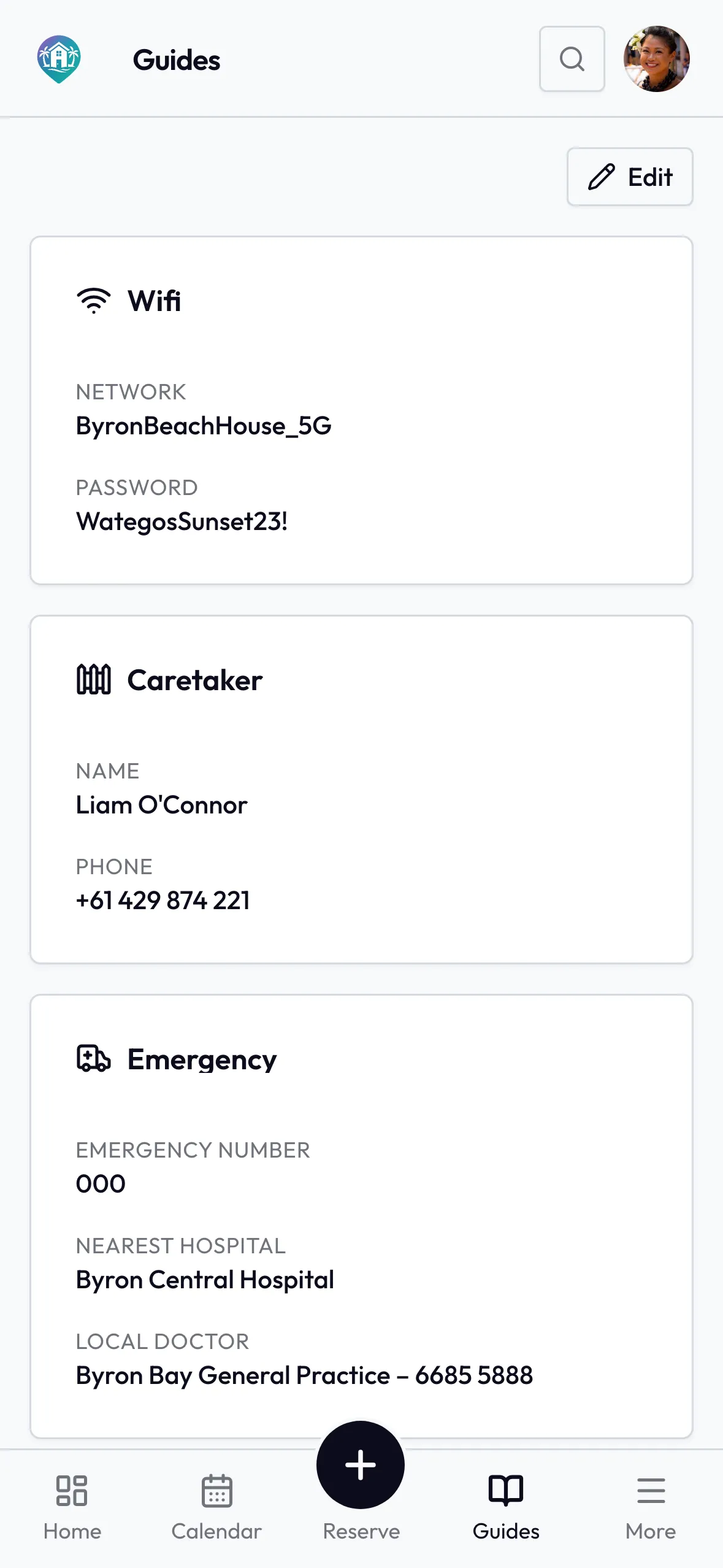
The guest-facing rules belong in the same guide people open on arrival — not only in an owners’ PDF.
Rules also serve an educational function, helping new co-owners or occasional users understand the property's systems and requirements. Information about septic systems, water conservation, heating and cooling preferences, and local regulations becomes part of the house rules, ensuring that everyone has access to important operational information.
Protect Your Property and Relationships
Perhaps most importantly, house rules protect both your financial investment and your personal relationships. Properties are expensive, and damage from misuse can be costly and frustrating. But the relationship costs of property conflicts often exceed the financial costs. Family relationships, friendships, and business partnerships can all be damaged by unresolved property disputes.
Good house rules create accountability systems that prevent problems before they occur. When everyone knows that certain behaviors aren't acceptable, they're less likely to engage in those behaviors. When problems do arise, having clear rules makes it easier to address them quickly and fairly.
What to Include in Your House Rules
Cleaning Schedules: Who Cleans, When, and How?
Cleaning responsibilities are often the biggest source of conflict in shared holiday homes. Different people have different cleanliness standards, and what feels "clean enough" to one person might be completely unacceptable to another. Effective cleaning rules address not just what needs to be cleaned, but when, how, and by whom.
Start by creating detailed cleaning checklists for different types of turnover. A basic departure cleaning might include dishes, trash removal, and quick tidying, while a deep cleaning rotation might involve tasks like scrubbing bathrooms, cleaning appliances, and washing linens. Be specific about standards – "clean the kitchen" means different things to different people, while "wash and put away all dishes, wipe down counters and appliances, sweep and mop floors" is unmistakably clear.
Consider implementing a rotation system for deep cleaning tasks that prevents the burden from falling disproportionately on any one person or family. Some groups assign specific areas to different co-owners (one family always handles bathroom deep cleaning, another focuses on kitchen appliances), while others rotate comprehensive cleaning responsibilities on a schedule.
Address the consequences of not meeting cleaning standards. This might include hiring professional cleaners at the non-compliant party's expense, losing privileges for future bookings, or other accountability measures. Having these consequences spelled out in advance makes enforcement much easier and less personal.
Build in flexibility for extraordinary circumstances. Sometimes flights get delayed, emergencies arise, or people get sick. Having provisions for these situations (such as allowing professional cleaning services to be hired or having backup cleaning supplies available) prevents exceptional circumstances from becoming ongoing conflicts.
Pet Policies: Are Pets Allowed? If So, Under What Conditions?
Pet policies require careful consideration because they involve both practical property management issues and deeply personal emotional attachments. Some co-owners may be passionate pet lovers who can't imagine a vacation without their furry family members, while others might be allergic, afraid, or simply prefer pet-free spaces.
If pets are allowed, establish clear guidelines about sizes, breeds, numbers, and supervision requirements. Consider factors like property damage potential, noise issues, and the impact on future guests who might have allergies or phobias. Some properties work well for small, well-trained dogs but aren't suitable for large or high-energy pets.
Address practical concerns like waste cleanup, leash requirements, and areas where pets are and aren't allowed. Be specific about indoor/outdoor restrictions, furniture policies, and sleeping arrangements. Consider the impact on cleaning requirements – pet stays might necessitate additional cleaning or different cleaning products.
Establish liability and damage policies clearly. Who pays for pet-related damage? What happens if a pet causes problems with neighbors or local wildlife? Are there additional cleaning fees for pet stays? Having these policies spelled out prevents disputes when problems arise.
Some groups compromise by allowing pets during certain seasons or in specific areas of the property. Others create pet-free periods between pet stays to accommodate guests with allergies. The key is finding solutions that work for your specific group while being fair to all stakeholders.
Noise Restrictions: Quiet Hours and Respect for Neighbors
Noise policies protect both your relationships with neighbors and the peaceful enjoyment of all co-owners. Holiday homes are often located in residential areas where excessive noise can create community problems, and different user groups may have very different ideas about appropriate noise levels.
Establish specific quiet hours that account for your property's location and local norms. Urban properties might have different noise expectations than rural retreats. Consider both indoor and outdoor noise sources – music, conversations, television, and activity noise all need consideration.
Address specific noise sources that commonly cause problems. Pool areas, hot tubs, outdoor dining spaces, and entertainment areas might need special guidelines. Consider the acoustics of your property and how sound travels to neighbors' properties or other areas of your own home.
Include guidelines for parties and gatherings. Are large parties allowed? Do they require advance notice to neighbors? Are there restrictions on outdoor events or amplified music? Having these policies clear prevents situations where some co-owners feel blindsided by others' entertainment choices.
Consider seasonal variations in noise policies. Summer evening gatherings might be more acceptable than winter parties, and weekend noise policies might differ from weekday expectations. Build in flexibility while maintaining clear boundaries.
Guest Limits: How Many People Can Stay at Once?
Occupancy limits protect both your property and your relationships with neighbors and local authorities. Overcrowding can lead to property damage, noise problems, parking issues, and violations of local regulations. Clear guest limits prevent these problems while ensuring everyone understands the property's capacity.
Consider both sleeping capacity and total occupancy. A property might comfortably sleep eight people but become overcrowded with more than twelve for day activities. Think about bathroom facilities, parking availability, and common area capacity when setting limits.
Address different types of guests and visits. Are there different limits for overnight guests versus day visitors? Are there restrictions on events or parties? Some groups allow larger gatherings for special occasions while maintaining stricter limits for regular visits.
Include provisions for guest approval or notification. Some co-owners might want to know when others are bringing large groups, while others prefer a more hands-off approach. Find a balance that provides necessary information without creating excessive bureaucracy.
Consider the impact of guest limits on different co-owners' needs. A family with grown children might need higher occupancy limits than a couple, while someone who likes to entertain might need different provisions than someone who prefers quiet retreats.
Additional Essential Rules
Smoking and Substance Policies: Be explicit about smoking policies, including cigarettes, cigars, and other substances. Consider both indoor and outdoor restrictions, disposal requirements, and local regulations.
Parking and Vehicle Guidelines: Address parking limitations, boat or RV storage, and vehicle maintenance. Consider neighbor relationships and local parking regulations.
Utility and Resource Management: Include guidelines for energy conservation, water usage, and other resource management. This might include thermostat settings, water heater management, and conservation expectations.
Security and Safety Protocols: Address key management, security system use, emergency procedures, and safety equipment maintenance. Include contact information for emergencies and local services.
Booking and Scheduling Rules: Include policies for reservation procedures, cancellation policies, and peak season allocation. Address how conflicts are resolved and what happens when demand exceeds availability.
Creating Enforceable and Fair Rules
Collaborative Development Process
The most effective house rules are developed through collaborative processes that give all stakeholders input into the final guidelines. This doesn't mean every rule needs unanimous agreement, but it does mean that everyone should have opportunities to voice concerns and suggest alternatives.
Start with a group discussion about values and priorities. What matters most to each co-owner? What are the biggest concerns about property use? What are the non-negotiables that everyone needs to respect? Understanding these fundamental preferences helps create rules that reflect the group's collective values.
Consider using surveys or other tools to gather input on specific policy areas. This can be particularly helpful for sensitive topics where people might be more comfortable expressing opinions privately before group discussions.
Build in regular review periods where rules can be updated based on experience. What seems reasonable in theory might prove impractical in reality, and being willing to adjust rules based on actual experience helps ensure they remain relevant and fair.
Implementation and Communication Strategies
Even the best rules are useless if they're not effectively communicated and consistently implemented. Create systems that make it easy for everyone to access and understand the current rules, and establish processes for addressing violations fairly and consistently.
Consider creating multiple formats for your house rules – a comprehensive document for reference, a quick summary for easy review, and perhaps visual reminders for key policies. Some groups create laminated cards with essential rules, while others use digital platforms that can be easily updated and accessed.
Make rules accessible to all users, including guests who might not be familiar with the property. Consider having abbreviated versions available in common areas and more detailed versions accessible online or in welcome materials.
Establish clear processes for addressing rule violations. This might include escalation procedures, consequences for repeated violations, and methods for appealing decisions. Having these processes spelled out prevents enforcement from becoming personal and helps maintain fairness.
Balancing Flexibility with Consistency
Effective house rules strike a balance between providing clear guidelines and allowing for reasonable flexibility. Overly rigid rules can make the property feel unwelcoming, while overly flexible rules can become meaningless. The key is creating rules that provide clear expectations while allowing for reasonable variations and exceptional circumstances.
Build in provisions for special circumstances and requests. This might include processes for requesting exceptions to standard rules, guidelines for special events or gatherings, and procedures for handling emergencies or unexpected situations.
Consider creating different rule sets for different types of visits or seasons. Summer rules might differ from winter rules, and weekend policies might vary from weekday expectations. This flexibility helps ensure rules remain relevant and practical across different use patterns.
Regular review and update processes help ensure rules remain current and fair. Schedule annual reviews where all co-owners can suggest changes, discuss problems, and update rules based on experience and changing circumstances.
Sample House Rules Template
Basic Property Information
- Property Address: [Complete address with directions]
- Emergency Contacts: [Local police, fire, medical, property manager]
- WiFi Information: [Network name and password]
- Key/Access Information: [Location, codes, procedures]
Occupancy and Guest Policies
- Maximum Occupancy: [Number] overnight guests, [Number] total people
- Guest Notification: [Required advance notice for guests]
- Pet Policy: [Allowed/not allowed, restrictions, fees]
- Smoking Policy: [Indoor/outdoor restrictions, disposal requirements]
Cleanliness and Maintenance
- Departure Cleaning: [Specific checklist of required tasks]
- Deep Cleaning Schedule: [Rotation assignments and frequency]
- Maintenance Issues: [Reporting procedures and emergency contacts]
- Damage Policy: [Reporting and payment procedures]
Noise and Neighbor Relations
- Quiet Hours: [Specific times and restrictions]
- Outdoor Entertainment: [Guidelines and restrictions]
- Music and Television: [Volume and timing restrictions]
- Parking: [Limitations and neighbor considerations]
Resource Management
- Utilities: [Thermostat settings, water conservation, energy use]
- Waste Management: [Trash and recycling procedures]
- Security: [Alarm systems, locking procedures, key management]
- Emergency Procedures: [Evacuation, utility shutoffs, emergency contacts]
Real Examples from Successful Shared Properties
"We rotate deep cleaning duties every month, and it's made a huge difference. Everyone knows exactly what's expected, and no one feels like they're doing more than their fair share."
One successful mountain cabin group solved their cleaning conflicts by creating specific deep cleaning assignments that rotate quarterly. Each family takes responsibility for different areas: one handles all bathroom deep cleaning, another focuses on kitchen appliances and pantry organization, and a third manages outdoor areas and storage spaces. This system leverages different people's strengths and preferences while ensuring comprehensive property maintenance.
Another beachfront property group created a "house rules passport" that includes not just the rules but also practical information about the property, local recommendations, and emergency procedures. New guests receive this passport upon arrival, and it's updated annually based on user feedback and changing circumstances.
A large extended family sharing a lake house created tiered occupancy rules that allow for different types of gatherings. Regular family visits are limited to 10 people, but special occasions like reunions or holidays can accommodate up to 16 with advance notice and additional cleaning requirements. This flexibility allows for both intimate family time and larger celebrations.
Making Rules Work Long-Term
The ultimate test of house rules isn't whether they sound good on paper – it's whether they actually work in practice over time. Successful rules create systems that become natural parts of property use rather than burdensome restrictions that people try to circumvent.
Focus on creating rules that serve clear purposes and provide obvious benefits to all users. When people understand why rules exist and how they benefit everyone, compliance becomes much easier. Rules that seem arbitrary or unfair are much more likely to be ignored or challenged.
Build in regular feedback mechanisms that allow for rule refinement based on actual experience. What works well? What causes confusion? What situations weren't anticipated? Using this feedback to continuously improve your rules helps ensure they remain relevant and effective.
Remember that the goal of house rules isn't to control every aspect of property use – it's to create a framework that allows everyone to enjoy their time while respecting the property and other users. When rules serve this purpose effectively, they become invisible facilitators of positive experiences rather than restrictive barriers to enjoyment.
Want more tips? Stay tuned for our next post on scheduling peak holiday times!
Download our comprehensive house rules template to get started creating your own property guidelines that actually work.


