

Shared Holiday Homes vs Our Shared Place for Co-Owned Vacation Homes
If you co-own a vacation home and you are comparing purpose-built tools, Our Shared Place and Shared Holiday Homes both aim to replace the messy stack of shared calendars, chat threads, and scattered folders. The practical difference is emphasis: Our Shared Place leans hard into co-ownership plus rental hosting (Airbnb/VRBO sync, public booking), with a clear per-property annual price. Shared Holiday Homes focuses on private co-owner groups — one calendar with booking rules, tasks, documents, and house guides — without advertising short-term rental calendar sync.
Disclosure: Shared Holiday Homes is our product. Details about Our Shared Place below come from their public website and pricing page as of 2026-08-06. Features and prices can change; always confirm on each product’s site before you decide.
This comparison is meant to help you choose honestly. Our Shared Place is a strong option for many groups. Shared Holiday Homes is not the right answer for every co-ownership setup. Fit depends on whether you need rental hosting tooling, how you want to handle finances, and how much of your admin load is calendar, tasks, and house information.
At a Glance
| Need | Our Shared Place | Shared Holiday Homes |
|---|---|---|
| Positioning | “Co-ownership, made easy,” including rental use cases | Make sharing a holiday home easy for families, friends, and co-owners |
| Public pricing (as of 2026-08-06) | $99 per property / year; unlimited members; no per-user fees | Plans priced by holiday-home size (rooms); unlimited members; live price at checkout |
| Free trial | 14 days; no credit card claimed | 7 days |
| Shared stay calendar | Yes, with approval rules and round-robin queue | Yes, with booking rules and double-booking protection |
| Airbnb / VRBO calendar sync | Advertised | Not advertised; not a product focus |
| Public booking page for rentals | Advertised | Not advertised |
| Finances / expenses | Built into the product pitch | Calendar, tasks, and docs first; pair with a documented expense process |
| Documents, contacts, checklists | Advertised | Document library and house guides; tasks for jobs |
| Mobile | Free iOS companion app; Android coming soon (per their site) | Web product; check current platform support during trial |
For a wider survey of calendar options — including free tools — see shared holiday home calendar solutions. If you are still on a shared Google Calendar, read Shared Holiday Homes vs Google Calendar first; that decision is often earlier than choosing between two co-ownership products.
When Our Shared Place Is a Better Fit
Our Shared Place can be the stronger choice when several of these apply:
You mix owner stays with short-term rentals
If the home also lists on Airbnb or VRBO, advertised calendar sync and a public booking page matter. Our Shared Place markets that wedge clearly. Shared Holiday Homes does not advertise Airbnb/VRBO sync and is not aimed at rental-hosting workflows.
You want finances inside the same product
Our Shared Place advertises finances and expenses alongside the calendar. If your group’s main pain is “who paid what” living in the same app as bookings, that built-in finance story is a real advantage. Shared Holiday Homes concentrates on calendar, tasks, documents, and house guides; money still needs a documented expense-split process (spreadsheet, calculator, or another finance tool).
Price clarity per property matters more than sizing by rooms
As of 2026-08-06, Our Shared Place publishes $99 per property per year, unlimited members, no per-user fees. That is easy to budget and compare. Shared Holiday Homes prices by holiday-home size (rooms); you confirm the live amount at checkout. Groups that prefer a published flat annual figure may lean Our Shared Place for that reason alone — prices can change, so verify on their site.
You want a longer trial and an iOS companion app
Our Shared Place claims a 14-day free trial with no credit card, plus a free iOS companion app (Android coming soon, per their site). Shared Holiday Homes offers a 7-day free trial. If trial length or a dedicated iOS app is decisive for your group, factor that in.
Checklists, contacts, and a photo gallery are core to how you run the house
Their public feature list includes contacts, checklists, photo gallery, role-based access, email notifications, and a round-robin booking queue. If those modules match how your group already thinks about admin, Our Shared Place’s feature surface may feel more complete on day one.
When Shared Holiday Homes Is a Better Fit
Shared Holiday Homes tends to fit better when most of these are true:
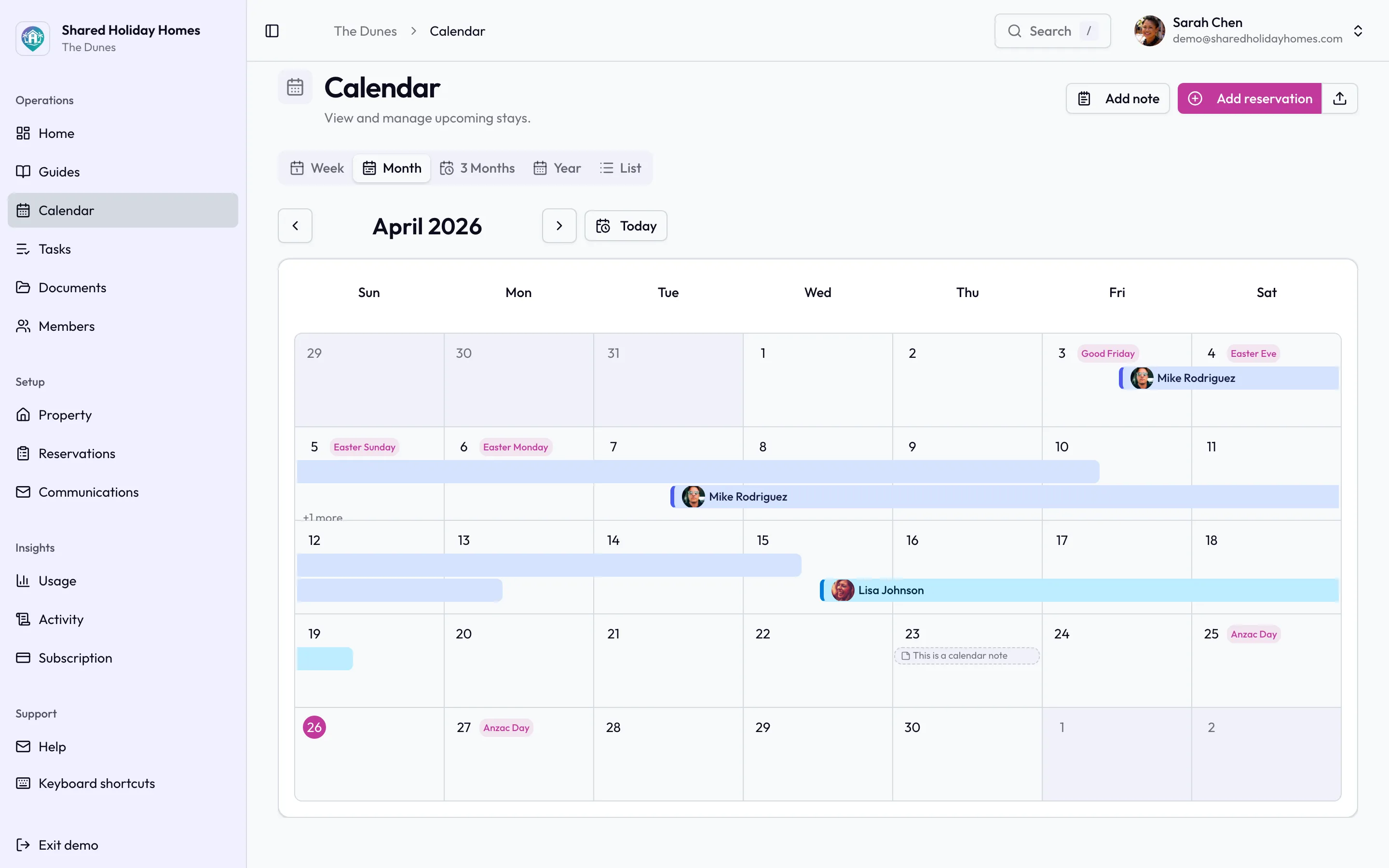
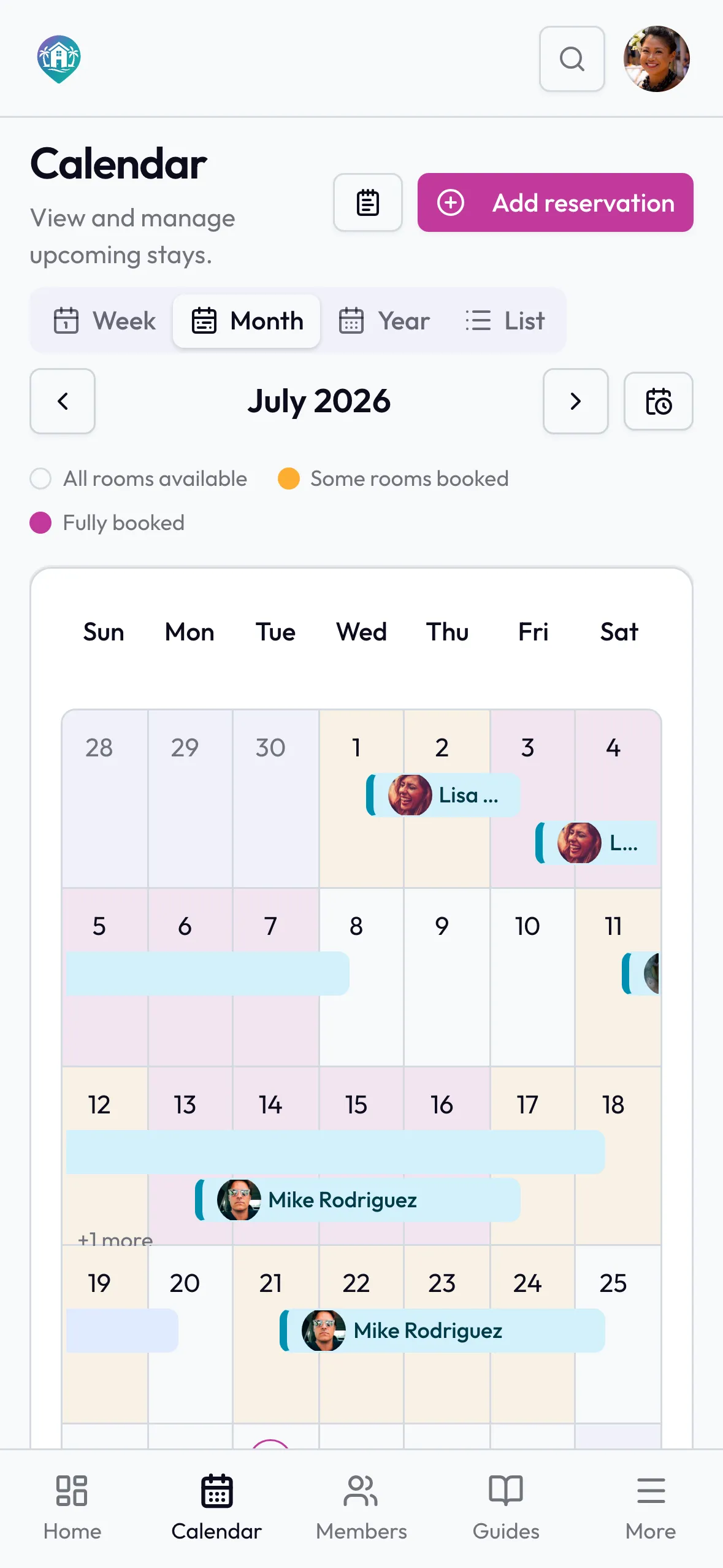
Private co-owner groups usually need a live stay calendar first — not a rental hosting dashboard.
Private co-owner use is the whole story
The home is for families, friends, and co-owners — not a rental business. You need one live calendar, booking rules, double-booking protection, tasks, documents, and house guides, without paying for (or navigating) rental-hosting features you will never use.
Booking policy and fairness are the main sources of friction
Peak weeks, booking windows, approvals, and “who always gets Christmas” arguments are the problems you are solving. Write the 12 booking decisions either way; Shared Holiday Homes is built so rules can sit with the calendar rather than only in a PDF.
You want free planning tools before you commit
Draft a rules pack, test a usage rotation, try a cleaning rota, or work through a cost-split method while you evaluate. Those tools help the group agree the operating model before anyone migrates bookings.
Room-based plans and unlimited members suit how you think about the property
Shared Holiday Homes prices by holiday-home size (rooms) with unlimited members. Confirm the current plan and price during signup or checkout — do not rely on a comparison article for a dollar figure. If your group is large but the home is modest, or you care more about “one home, everyone invited” than a flat published annual fee, try the trial and check live pricing.
Expenses can live in a clear process next to the calendar
If you already have (or want) a simple spreadsheet or calculator for shared costs, you may not need finances inside the same product. Pair Shared Holiday Homes with a documented expense process so money does not drift back into chat.
Feature-by-Feature and Real Scenarios
Booking calendar and conflict protection
Our Shared Place: Advertises a booking calendar with approval rules and a round-robin booking queue — useful when the group wants turn-based fairness baked into how requests are ordered.
Shared Holiday Homes: One shared calendar with booking rules and double-booking protection so confirmed stays are not left to careful clicking and hope.
Both products treat the calendar as more than a shared Google event list. The nuance is queue style, rule depth, and whether rental sync sits next to owner stays.
Peak summer weeks keep going to the same household
Our Shared Place: Round-robin queue and approval rules can reduce pure “first click wins” behaviour if the group configures them that way.
Shared Holiday Homes: Peak rotations and usage visibility make the pattern hard to ignore. Pair the calendar with a simple usage rotation plan before the next season opens.
Owner stays plus Airbnb guests
Our Shared Place: Advertised Airbnb/VRBO calendar sync and a public booking page are designed for this mixed model. That is a clear strength when rentals are part of the economics.
Shared Holiday Homes: Does not advertise rental calendar sync. If guest rentals are core to how the home pays for itself, Our Shared Place (or a dedicated rental channel manager) is the more honest fit.
A pipe bursts and nobody can find the plumber
Our Shared Place: Contacts, documents, and checklists are part of the advertised feature set — a natural home for vendor details if the group keeps them updated.
Shared Holiday Homes: Keep vendor details, manuals, and emergency notes in the document library or house guides so the right person can act without waiting for the “admin” owner.
Year-end meeting turns into a money fight
Our Shared Place: Finances and expenses in-product may give the meeting a shared ledger if everyone logged costs during the year.
Shared Holiday Homes: Usage and booking history give a shared baseline for nights; settle money with your agreed cost-split method so the calendar tool and the finance process do not fight each other.
Documents, house knowledge, and jobs
Both products advertise a place for property information beyond the calendar. Our Shared Place also calls out checklists and a photo gallery. Shared Holiday Homes emphasises a document library, house guides (arrival notes, WiFi, appliances), and a shared task list with named owners and due dates. Tour both during trial week and see which layout your group will actually maintain.
Pricing Comparison
As of 2026-08-06, Our Shared Place’s public price is $99 per property per year, unlimited members, no per-user fees, with a 14-day free trial (no credit card claimed on their site). That clarity is a genuine strength for budget conversations.
Shared Holiday Homes uses plans priced by holiday-home size (rooms), unlimited members, and a 7-day free trial. Confirm the live price at checkout — this article does not invent a Shared Holiday Homes dollar amount. Prices on both sides can change.
A fair way to decide:
- List whether you need rental sync and in-app finances.
- Estimate admin hours and conflict cost if you stay on free calendars and chat.
- Compare Our Shared Place’s published annual fee against Shared Holiday Homes’ current plan at signup for your home’s size.
- Run both trials if the group is undecided — fourteen days versus seven days still gives you a real feel for calendar and permissions.
Do not choose software because a blog invents a neat monthly figure. Choose it because the feature set matches how your co-owners actually book, pay, and maintain the house.
Switching Notes
If you move from spreadsheets or Google Calendar to either product:
- Write or refresh the booking policy first — peak dates, cancellations, guests, maintenance blocks. Use the booking rules checklist.
- Create the property and invite every co-owner household so nobody is stuck on the old chat thread.
- Enter upcoming confirmed stays so nothing falls through during the cutover.
- Move the documents and contacts people actually ask for (insurance, plumber, WiFi, arrival notes).
- Retire the old calendar as the booking source of truth once everyone is live. Two live systems create double updates and new conflicts.
If you are switching between Our Shared Place and Shared Holiday Homes, export or screenshot bookings, expense history, and document lists before you cancel. There is no universal one-click migrate between competitors; plan a short overlap week and a clear “go live” date.
You can still use personal calendars for school terms or travel around house stays. Retire the old tool as the shared booking system, not as every calendar in everyone’s life.
FAQ
Is Our Shared Place or Shared Holiday Homes better for co-owned vacation homes?
Neither is universally better. Prefer Our Shared Place when rental sync, in-app finances, a published $99/year figure (as of 2026-08-06), or a longer trial and iOS app matter. Prefer Shared Holiday Homes when private co-owner calendar rules, tasks, documents, and house guides are the core job, and you are happy pairing expenses with a separate documented process.
Does Shared Holiday Homes sync with Airbnb or VRBO?
Shared Holiday Homes does not advertise Airbnb/VRBO calendar sync and is not focused on short-term rental hosting. If that sync is required, Our Shared Place’s advertised rental features are the more relevant comparison — verify current capability on their site.
How does pricing compare?
Our Shared Place publicly lists $99 per property per year with unlimited members (as of 2026-08-06; prices can change). Shared Holiday Homes prices by rooms with unlimited members; check the current plan and checkout total during signup. Run the free trials if you need a hands-on comparison.
Can we keep Google Calendar and only add one of these tools for documents?
You can, but split systems often recreate the original problem: bookings in one place, documents in another, fairness somewhere else. Many groups either stay fully on Google Calendar (see Shared Holiday Homes vs Google Calendar) or move bookings into the co-ownership product so one source of truth remains.
Do we need software before we write booking rules?
No. Write the rules first. Software helps enforce and share them; it cannot invent a fair policy. Start with vacation home booking rules for co-owners and a simple usage rotation planner before you migrate.
Keep the admin lighter
Pick Our Shared Place when co-ownership and rental hosting belong in one product, or when a clear published annual price and built-in finances match how you already run the house. Pick Shared Holiday Homes when the job is private co-owner booking rules, tasks, documents, and house guides — with expenses handled through a process your group trusts.
Start a free trial of Shared Holiday Homes and see whether one shared place for bookings, rules, tasks, and house information removes the admin load your group has outgrown. Compare against Our Shared Place’s trial in the same week if rental sync or in-app finances are still open questions.
For a wider shortlist, see the 2026 shared vacation home calendar roundup, plus Shared Holiday Homes vs SharedKey and The Vacation Calendar alternatives.


